June 2010
For years, construction employers, farm labor contractors and even homeowners looking for extra help to mow the lawn have been picking up day laborers at the 76 gas station in downtown Stockton.
Against the wishes of property owners, the location - known as the Gateway Project when it opened in 2001 - has become an unofficial day labor pickup site.
That may soon change.
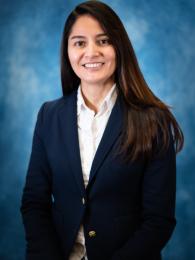
Read the full report by Jennie Rodriguez, Record Staff Writer.
A powerful quake strikes Tijuana & Southern California. There are reports of widespread property damages.
April 2010
A message from our El Centro office:
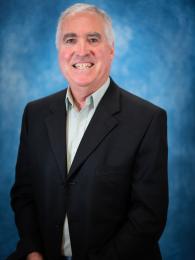
"We have had thousands of after shocks, some imperceptible, but yesterday morning we had a 5.5 when Senator Boxer was touring Calexico. Hopefully, things are settling down. The Governor was also here yesterday and we are hoping for an emergency declaration so that federal funds can start flowing. Estimates are that about 800 homes/mobiles have been red tagged. 23 businesses in Calexico are condemned. Two 60-ton water filtration tanks were knocked off their bases, etc., etc. etc. We actually have not had anyone calling or coming in with quake-related issues, but I know that it is just a matter of time. A coordinator for the Red Cross from San Diego called me yesterday and we are setting up a meeting of various providers for Monday. I have also set up a meeting with some housing assistance providers for this afternoon, but we may just combine it with the Red Cross meeting Monday. Thanks for thinking of us. Just to put our quake into perspective, it was stronger than either the Haiti or South American quakes."
Lorenzo Campbell
District Attorney
CRLA El Centro Office
Photo by Sasha KhokhaDecember 2009
More than 50 farmworkers in Fresno County are fighting to get their jobs back. They were fired after complaining that they were being paid less than minimum wage. As we discover, this may not be an isolated incident.
The California Report
by Sasha Khokha

Pride, Not Prejudice: Lisa Cisneros calls it her “night job,” volunteering for the No on 8 campaign, Salinas Valley Equality, and as a Triangle Speaker on LGBT panels at schools and churches. Photo by Nic Coury
July 2009
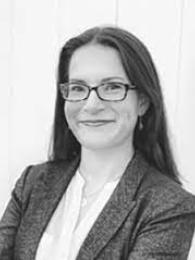
CRLA attorney Lisa Cisneros was honored by her local newspaper as a local hero for her civil rights work, providing assistance to both farmworkers and the LGBT community.
Read the full article about Lisa.
May 1, 2009
A U.S. District Judge ruled in favor of the residents of Duroville, and is allowing the mobile home park to remain open. The lead council for this case was CRLA attorney Arturo Rodriguez. If this mobile park would have closed it would created one of the biggest forced migrations in recent years and could have left many people homeless.
Read the full articles on Duroville,
To make a secure online donation and support our mission of affordable housing please visit our Donate Now page.
April 8, 2009
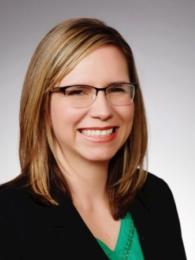
On April 8, the California Supreme Court heard oral argument in the case of Arias v. Superior Court of San Joaquin County (Angelo Dairy). Arguing on behalf of petitioner Jose Arias was CRLA attorney and regional director of advocacy Blanca Banuelos.
Of her first meeting with Mr. Arias back in December 2005, Blanca says what she remembers most is completely believing Mr. Arias. “He is a very humble, very hardworking man who obviously cared very much about his family. I trusted him.” Mr. Arias had been working at the Angelo Dairy for ten years, often working two shifts a day, always, he said, without overtime.
In his case against the dairy, Mr. Arias has alleged numerous Labor Code and regulatory violations, including not only his claim for unpaid overtime wages, but also that he received no meal periods or rest breaks, and that employee housing was uninhabitable.
In addition to seeking unpaid wages for himself, Mr. Arias is also seeking to represent the interests of other current and former employees of the dairy who suffered from the same practices. At issue before the Supreme Court on Wednesday was whether Mr. Arias will be permitted to do so under two California statutes – the Unfair Competition Law and the Private Attorneys General Act -- which enable injured workers, and others, to bring representative suits, instead of class actions, on behalf of themselves and others who are not able to bring a case on their own.
When asked about the importance of the case, CRLA Director of Litigation and Advocacy Mike Mueter had this to say: “It’s a pivotal case for rural Californians who typically don’t have access to attorneys and firms with experience or capacity to file class action suits.” Class actions carry unique filing requirements and are more costly than other representative actions. They are also off limits to LSC funded legal aid lawyers. As a result, the ability of poor people to bring representative suits hinges to a large extent on the court’s decision in Mr. Arias’ case.
The argument was also momentous because it marked the debut of another young CRLA attorney before California’s highest court. As CRLA Executive Director Jose Padilla told Blanca in a message of congratulations to her after the argument, “the most honorable and symbolic advocacy for a legal services attorney is to use our voice and skill in defense of the poorest, to seek their justice before a court of final appeal.”
Irrespective of the court’s decision, by advocating before the California Supreme Court on behalf of Mr. Arias and those he seeks to represent, Blanca has fulfilled one of the most basic purposes of the national legal services program – to ensure that poor people have full access to this country’s judicial system, and through it to democracy. Asked about the experience, Blanca said that she felt very lucky to have been able to represent a client willing to delay his own claim so as to represent other workers. “I feel very lucky to have been able to give him a voice.”
Lending a hand, experienced appellate attorneys from the private bar and the public interest community donated time to work with Blanca in moot court sessions before the argument. Blanca was cheered on at Wednesday’s argument by her mom and two brothers, as well as staff from 6 CRLA offices. A decision is expected sometime within the next 90 days
To make a secure online donation and support Blanca's work please visit our Donate Now page.
March 27, 2009
Recently CRLA attorney Lisa Cisneros and community worker Diana Feliz Oliva were featured on NPR. NPR's The California Report highlighted the CRLA program, Proyecto Poderoso. A joint program with the National Center for Lesbian Rights (NCLR) that provides assistance to low-income lesbian, gay, bisexual and transgender people facing harassment and discrimination in rural communities.
Listen to our story on The California Report.
(Segment about Proyecto Poderoso starts at the 15:30 mark)
To make a secure online donation and support Proyecto Poderoso please visit our Donate Now page.
Jan. 06, 2009
Late last week, a Superior Court Judge granted our clients and the many Laton residents that they represent a preliminary injunction to suspend increased water rates pending at the very least a properly noticed public hearing on the matter. We challenged the water/sewer rate increase based on (1) the water district's failure to notify all water / sewer customers of a proposed water rate increase, (2) an inaccurate assessment of the amount of money that the district needs from user fees, and (3) unlawful assessment of fees that disproportionately burdens low income customers.
The judge has ordered a joint report outlining proper notice procedures and has called a status conference for later this month. The engineer who set the rates and notice procedures for Laton is the engineer for the majority of the water / sewer systems in the south san Joaquin valley so while this case only effects a few hundred residents, we hope that a settlement that demonstrates the importance of fair and just rates, as well as fair and just notice procedures will benefit many of the small communities of the central valley and the state.
Read the full article by By Pablo Lopez / The Fresno Bee here.
To make a secure online donation please visit our Donate Now page.
As temperatures in the pepper fields of the Coachella Valley blazed above 100 degrees Fahrenheit, workers sought out safety and health protections to avoid heat stress and exhaustion - regular break periods, access to shaded areas and cool drinking water. The workers frequently found, however, that the drinking water provided by the farm labor contractor was too warm to drink, and regularly asked their supervisor to bring ice to cool down the water. The supervisors discouraged workers from taking rest breaks, even though the right to such rest periods is guaranteed by state regulation. The farmworkers knew that something was not right, and the workers contacted the CRLA Coachella office to seek rural justice. CRLA advocates sprung into action.
CRLA discovered that the farm labor contractor never provided the pepper workers with the required trainings on how to avoid heat illness. During the last week of May, one worker had a bloody nose because of the heat. During the first week of June, in retaliation for their requests for safer working conditions, the entire crew was fired by their supervisor. Within two weeks of speaking to the pepper workers, CRLA attorneys filed a lawsuit in Riverside County Superior Court seeking the reinstatement of the fired workers and a court order requiring compliance with heat illness prevention regulations.
On June 20, 2008, the Superior Court Judge issued a temporary restraining order requiring the employer to provide sufficient cool drinking water for all employees; to provide necessary preventative rest periods in the shade for workers; and provide mandated heat illness prevention trainings.
Read more about CRLA Work and Safety Advocacy and make a donation to help guarantee Rural Justice victories like that of the Coachella Valley pepper workers.
News Links:
June 23, 2008 - KESQ.com
Laborers File Suit Over Inadequate Conditions During Extreme Heat
June 23, 2008 - The Press-Enterprise / PE.com
Judge orders shade, water for a company's Coachella Valley farm workers